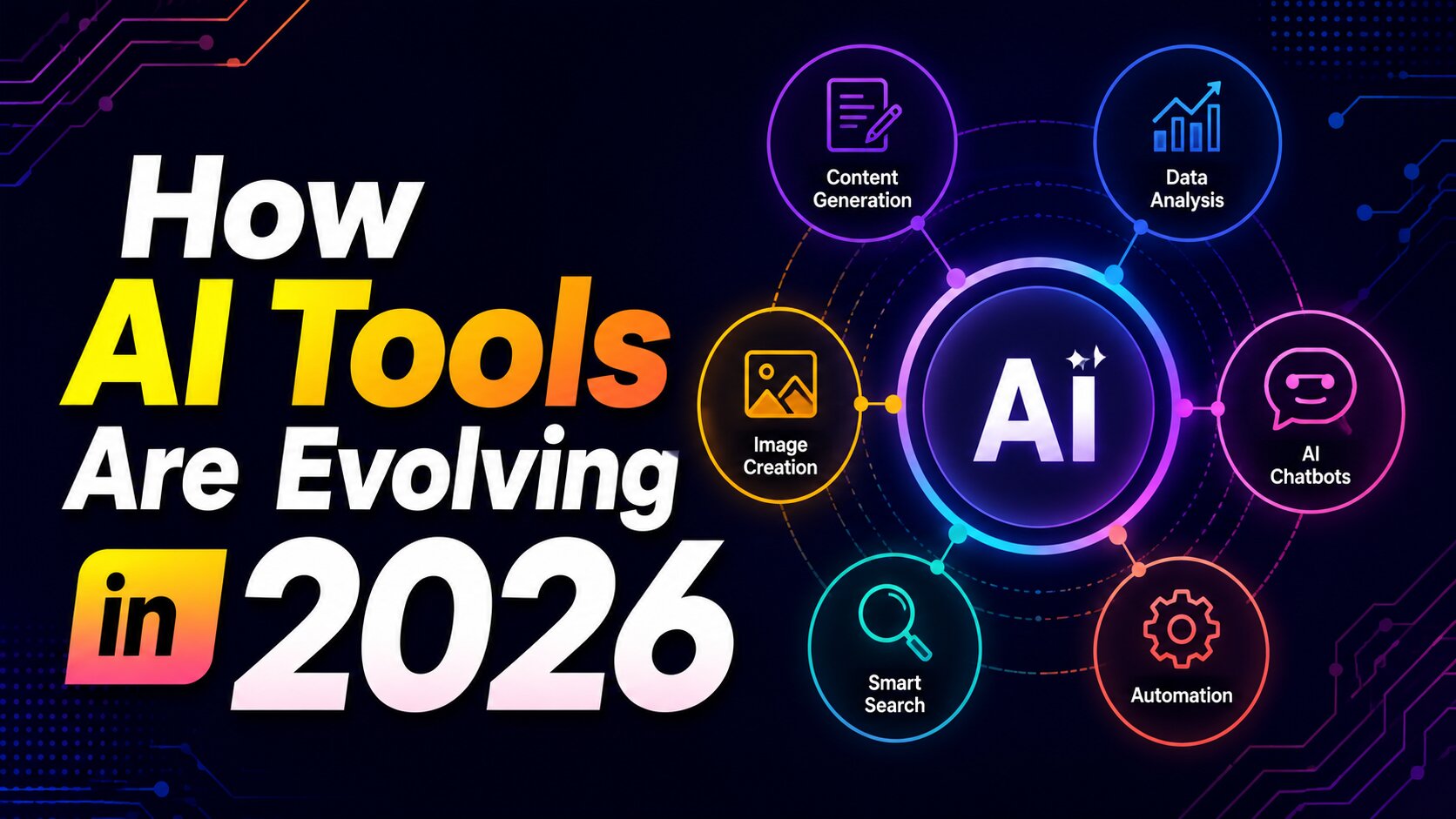
Artificial intelligence has entered a new phase in 2026. Instead of simply generating text or images, today’s AI tools are becoming smarter, faster, more personalized, and deeply integrated into everyday work. Businesses, creators, developers, students, and professionals now rely on AI for everything from research and coding to marketing, customer support, video production, and Business Automation
The biggest shift isn’t that AI can perform more tasks—it’s that modern AI systems are becoming capable of understanding context, collaborating across multiple applications, and helping users complete entire workflows rather than isolated requests.
This article explores how AI tools are evolving in 2026, the technologies driving these improvements, the industries seeing the greatest impact, and what users should consider before adopting new AI solutions.
Quick Summary
- AI tools in 2026now handle complete workflows instead of single tasks.
- Multimodal AI can understand text, images, audio, video, and documents together.
- Personalized AI assistants are becoming more capable through long-term memory and context awareness.
- Automation is expanding across business operations, marketing, software development, and customer service.
- Privacy, transparency, and responsible AI practices remain important considerations.
What Is Driving AI Evolution in 2026?
Several technological advances are shaping the newest generation of AI platforms.
Improved Reasoning Capabilities
Modern AI models are better at analyzing complex information, following multi-step instructions, identifying patterns, and assisting with decision-making. While human oversight is still important, AI has become much more effective at handling sophisticated tasks that previously required multiple specialized tools.
Multimodal Intelligence
Instead of working with only text, today’s AI systems understand multiple content formats simultaneously. A single assistant can analyze documents, interpret charts, summarize meetings, generate images, explain videos, and answer questions using combined information from several sources.
Long-Term Context
Many AI tools in 2026 now maintain better context throughout longer conversations or ongoing projects. This reduces repetitive prompts and enables more natural collaboration over time.
Faster Processing
Advancements in hardware optimization and model efficiency have significantly reduced response times. Users experience quicker content generation, faster coding assistance, and more responsive AI interactions.
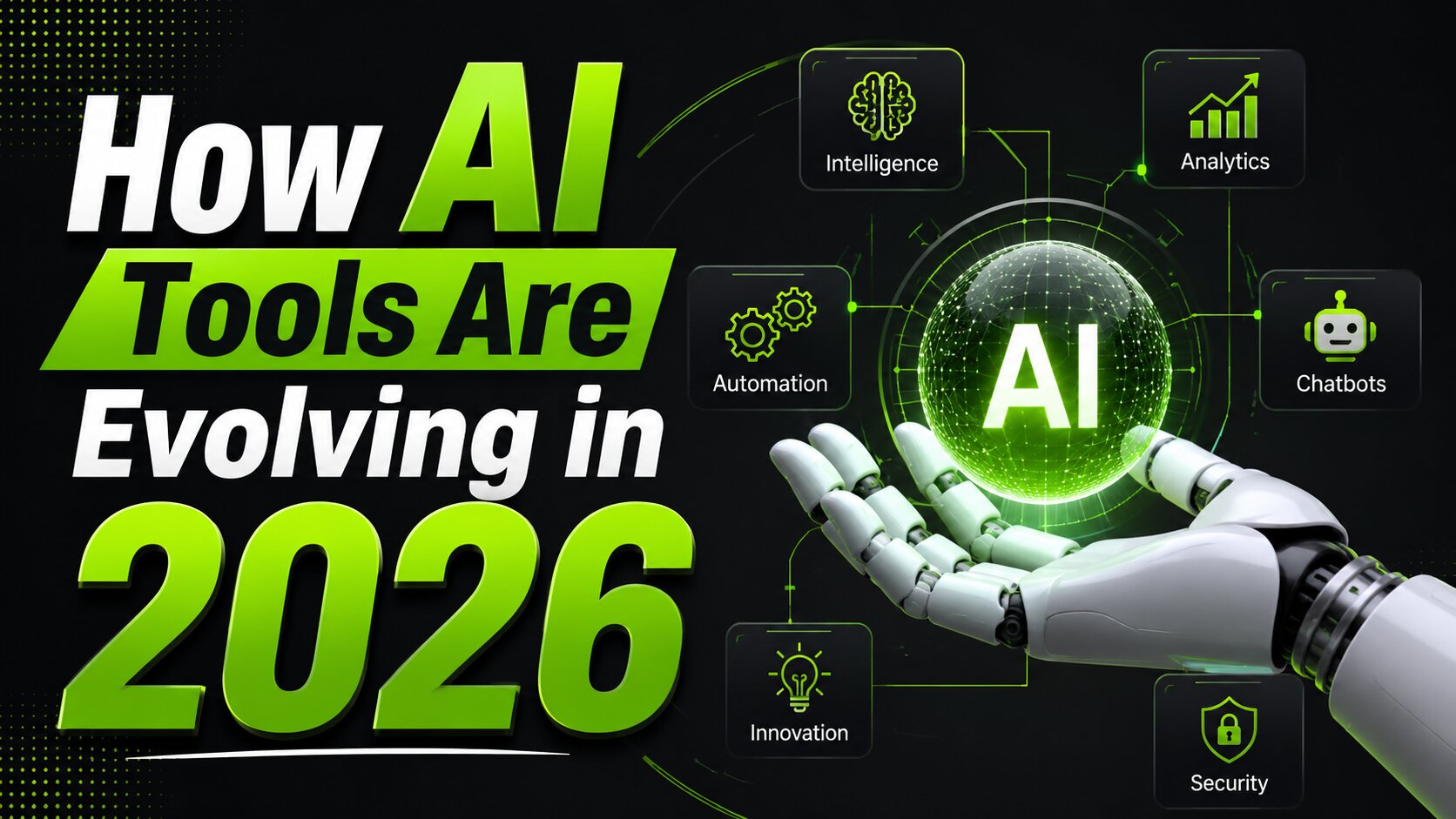
Major Trends Shaping AI Tools in 2026
1. AI Agents That Complete Entire Tasks
One of the most significant developments is the rise of AI agents. Instead of generating isolated responses, these systems can perform sequences of actions such as:
- Researching information
- Organizing documents
- Creating reports
- Managing schedules
- Writing emails
- Analyzing data
- Preparing presentations
This workflow-oriented approach helps reduce repetitive work while allowing people to focus on higher-value activities.
2. Better Personalization
AI tools increasingly adapt to individual preferences, writing styles, business needs, and recurring tasks. Personalized recommendations make interactions more efficient while maintaining consistency across projects.
3. Deeper Software Integration
Instead of operating as standalone applications, AI is becoming embedded within productivity suites, design platforms, customer relationship management software, development environments, and communication tools.
This reduces the need to switch between multiple applications throughout the workday.
4. Smarter Business Automation
Organizations are using AI to automate:
- Customer inquiries
- Document processing
- Lead qualification
- Invoice management
- Knowledge management
- Meeting summaries
- Internal reporting
Rather than replacing employees, these systems often streamline repetitive administrative tasks.
How Different Industries Are Using AI in 2026
Marketing
Marketing teams use AI to generate campaign ideas, optimize content for search engines, create advertising copy, analyze customer behavior, and improve audience targeting.
Software Development
Developers benefit from AI-assisted coding, automated debugging, documentation generation, code reviews, testing support, and architecture recommendations.
Education
Students and educators use AI for personalized tutoring, lesson planning, language learning, research assistance, and content summarization while emphasizing critical thinking and source verification.
Healthcare
Healthcare organizations continue exploring AI for administrative efficiency, medical documentation, research support, imaging assistance, and workflow optimization under appropriate professional oversight.
Finance
Financial professionals use AI for data analysis, reporting, fraud detection support, market research, customer service automation, and compliance-related documentation.
Comparison of AI Tools in 2026
| Feature | Earlier AI Tools | AI Tools in 2026 |
|---|---|---|
| Input Types | Mainly text | Text, images, audio, video, documents |
| Context Handling | Limited conversations | Extended context and memory features |
| Automation | Individual tasks | Complete workflows |
| Integration | Standalone applications | Connected with business software |
| Productivity | Content generation | Research, planning, execution, and analysis |
Benefits of Modern AI Tools
- Greater productivity across teams
- Reduced manual workload
- Faster research and analysis
- Improved content creation
- Enhanced collaboration
- Better accessibility through natural language interfaces
- More consistent documentation and reporting
- Scalable automation for growing businesses
Challenges Users Should Consider
Accuracy Still Requires Verification
AI can generate impressive results, but users should continue reviewing important information, especially in legal, financial, medical, and technical contexts.
Privacy and Data Protection
Organizations should understand how AI providers handle uploaded data, especially when processing confidential business information or sensitive customer records.
Responsible AI Use
Businesses increasingly establish internal guidelines covering transparency, human oversight, copyright considerations, and ethical AI usage.
Skill Development
As AI automates repetitive tasks, professionals benefit from strengthening critical thinking, communication, creativity, and domain expertise that complement AI capabilities.
Tips for Choosing AI Tools in 2026
- Select tools that integrate with your existing workflow.
- Evaluate security and privacy features before adoption.
- Look for regular updates and active product development.
- Choose platforms with clear documentation and customer support.
- Test AI outputs using real business scenarios before full deployment.
- Compare pricing against productivity improvements rather than features alone.
The Future of AI Beyond 2026
AI development continues to move toward systems that assist people throughout complete projects instead of isolated tasks. Future improvements are likely to include stronger collaboration between multiple AI agents, more natural voice interactions, broader device integration, enhanced personalization, and better reasoning capabilities.
At the same time, responsible governance, transparency, and user control will remain essential as AI becomes more deeply integrated into business operations and everyday life.
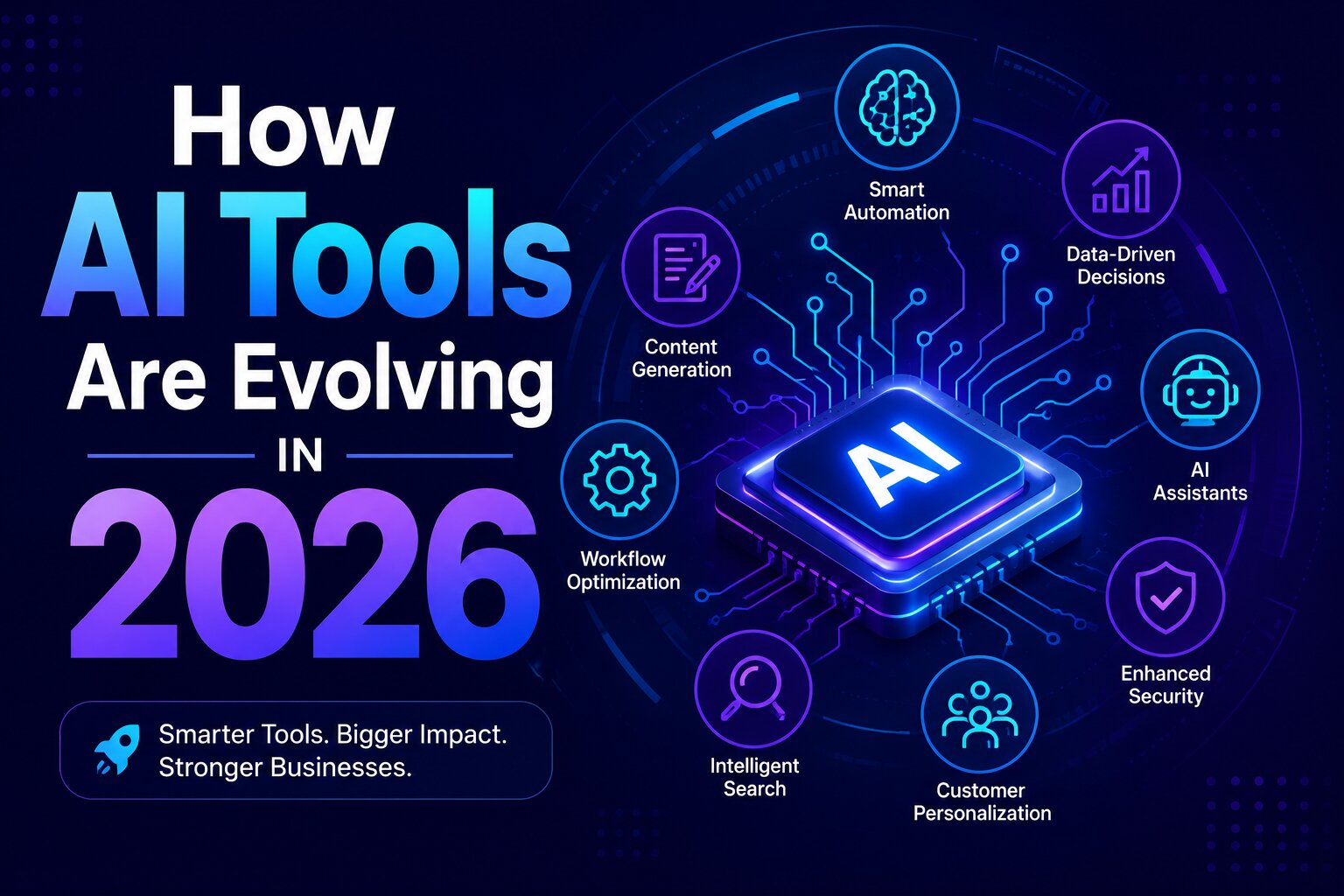
Frequently Asked Questions
What are the biggest AI trends in 2026?
The major trends include multimodal AI, workflow automation, AI agents, personalized assistants, stronger software integration, and improved reasoning capabilities.
Are AI tools in 2026 replacing human workers?
Most AI tools are designed to automate repetitive tasks and improve productivity. Human expertise remains essential for decision-making, creativity, strategy, and oversight.
Which industries benefit the most from AI?
Marketing, software development, education, finance, healthcare, customer support, manufacturing, and content creation are among the industries seeing significant productivity gains.
How can businesses prepare for AI adoption?
Businesses should identify repetitive workflows, establish governance policies, train employees, evaluate security practices, and implement AI gradually with measurable goals.
Will AI continue improving after 2026?
Yes. AI research continues to advance rapidly, with ongoing improvements in reasoning, multimodal understanding, efficiency, automation, and collaboration across digital tools.
The evolution of AI tools represents a meaningful shift from simple assistants to intelligent collaborators capable of supporting complete workflows. Organizations and individuals now have access to AI systems that streamline research, automate repetitive processes, generate high-quality content, assist with software development, and improve productivity across countless industries.
While these technologies continue to mature, successful adoption depends on thoughtful implementation, human oversight, responsible data practices, and continuous learning. Users who combine AI’s efficiency with human expertise will be best positioned to benefit from the next generation of intelligent tools.